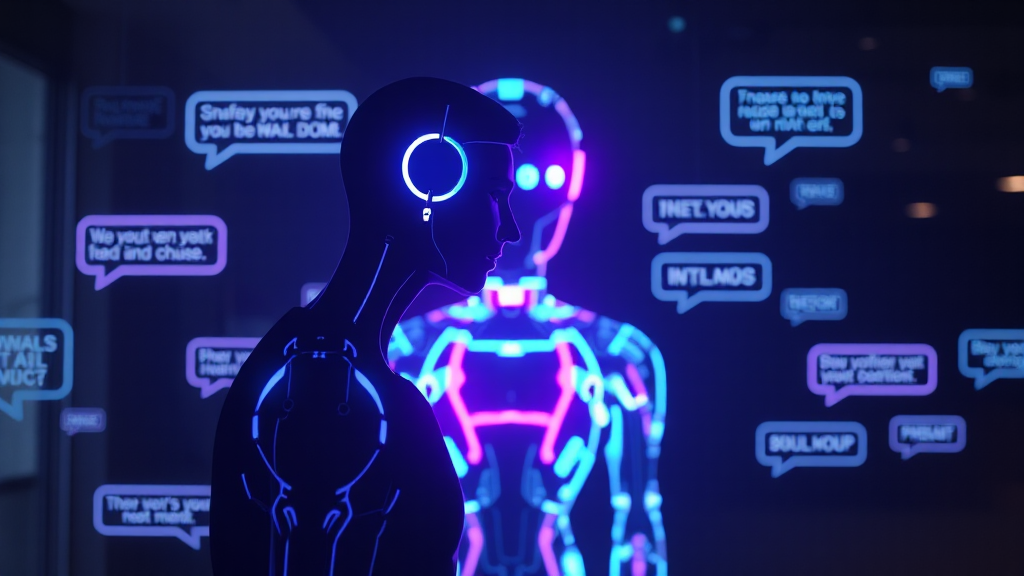
NSFW AI Explained: How Unfiltered Chatbots Are Reshaping Digital Companionship
Conversational AI has moved far beyond simple question-and-answer tools. One of the fastest-growing corners of this space is nsfw ai, a category of chatbots and companion platforms designed to handle mature, romantic, and emotionally charged conversations that mainstream assistants typically refuse. Instead of hitting a wall of canned refusals, users can explore fantasy, flirtation, and roleplay in a space built specifically for adults. Understanding what this technology actually is, how it works, and where its boundaries sit matters for anyone curious about the next wave of human-machine interaction.
This article breaks down the mechanics, the appeal, the ethical debates, and the practical considerations behind unfiltered AI companions — without hype and without pretending the category does not exist.
What Exactly Counts as NSFW AI?
The term covers a broad spectrum. At its core, NSFW AI refers to language models and companion applications that are tuned or prompted to produce content unsuitable for a general audience. That includes romantic roleplay, explicit storytelling, flirty banter, and character-driven fantasy scenarios. Unlike a general-purpose assistant that redirects every suggestive prompt toward a help article, an NSFW-focused model leans into the conversation.
Most platforms in this space are built on top of large language models that have been fine-tuned or wrapped with custom system prompts. Some use open-weight models that developers can modify freely. Others build proprietary layers on top of commercial APIs, carefully managing moderation settings to allow mature themes while still blocking genuinely illegal content. The result is a spectrum: from mildly suggestive companion apps to fully explicit roleplay engines.
It is worth separating two ideas that often get blurred. First, there is the underlying model capability — what the AI can generate. Second, there is the product policy — what the platform allows users to do. A powerful model can be constrained by strict filters, while a less capable model might be wide open. When people talk about NSFW AI, they are usually describing the combination of both.
Why Companion Chatbots Are Gaining Traction
The growth of this category is not accidental. Several forces are converging at once.
Loneliness and social fatigue. Surveys across multiple countries keep finding that a significant share of adults report feeling lonely or socially isolated. For some, a companion chatbot offers low-pressure interaction without the fear of judgment, awkwardness, or rejection. It is always available, never tired, and never bored.
Creative freedom. Writers, roleplayers, and fans of interactive fiction use these tools to explore characters and storylines that would be difficult to coordinate with human partners. A chatbot can play a pirate captain, a cyberpunk hacker, or a childhood friend without needing scheduling or consent negotiations.
Privacy. Many users prefer to explore personal fantasies in a private digital space rather than posting on public forums or risking embarrassment. A one-on-one chat with an AI feels safer than many alternatives.
Improving quality. Early chatbots were repetitive and forgetful. Modern systems maintain context over long conversations, remember user preferences, and adapt tone. That jump in quality makes the experience feel less like a gimmick and more like a genuine interaction.
How These Platforms Actually Work Under the Hood
Most NSFW AI products share a similar technical architecture, even if the user-facing experience differs.
1. The base model. A large language model provides the raw text generation. Some platforms use open models like Llama derivatives; others rely on commercial APIs. The choice affects cost, speed, and how much control the platform has over content.
2. Character and persona layers. Users typically select or create a character with a name, backstory, personality traits, and speaking style. This persona is injected into the conversation as a system prompt or memory block, shaping every response.
3. Memory and context. Good companions remember what you told them last week. Platforms implement this through vector databases, summarization, or extended context windows. The better the memory, the more coherent the relationship feels.
4. Moderation and safety rails. Even permissive platforms usually block content involving minors, non-consensual scenarios, or real-person impersonation. How strictly these rules are enforced varies widely, and that variance is one of the biggest sources of controversy.
5. Interface and immersion. Many apps add voice, avatars, image generation, or animated reactions. These features increase engagement but also raise the technical bar and the cost of running the service.
Understanding this stack helps explain why two NSFW AI apps can feel completely different. One might be a clever prompt wrapper around a general model, while another invests heavily in memory, character consistency, and multimodal features.
The Ethical and Practical Debates
No honest discussion of this category can skip the controversies. They are real, and they matter.
Consent and real people. A major concern is chatbots modeled on real individuals without permission. Most reputable platforms prohibit impersonating real people, but enforcement is uneven. Users should be cautious about any service that encourages this.
Emotional dependence. Critics worry that users, especially vulnerable ones, may substitute AI relationships for human ones. Defenders argue that a chatbot can be a stepping stone to social confidence rather than a replacement. The truth likely depends on the individual and how the tool is used.
Data privacy. Intimate conversations are sensitive data. Users should check what a platform stores, whether chats are encrypted, and whether conversations are used for training. A vague privacy policy is a red flag.
Age verification. Since the content is adult-oriented, age gates matter. Self-declared birthdates are weak protection, and regulators in several regions are pushing for stronger verification. The industry is still figuring out how to balance privacy with enforcement.
Content moderation paradox. Platforms must allow mature content while blocking illegal content. That is a narrow line. Over-moderate and users leave; under-moderate and the platform risks legal trouble. The most sustainable approach tends to be transparent rules, clear reporting tools, and consistent enforcement.
What to Look for in an NSFW AI Platform
If you are evaluating options, a few practical criteria separate a solid product from a frustrating one.
Character depth. Can you define personality, backstory, and speech patterns? Shallow characters get boring within minutes. Deep ones sustain long-term engagement.
Memory quality. Does the bot remember key facts across sessions? Test it by mentioning something specific early and referencing it later.
Response speed. Slow replies break immersion. Latency matters more than raw model size for many users.
Safety policies. Read the terms. A platform that clearly prohibits illegal content and explains its enforcement is more trustworthy than one that says nothing.
Pricing transparency. Many services use credit systems or subscriptions. Understand what you get before committing, and watch for auto-renewal traps.
Community and support. Active forums, responsive support, and regular updates suggest a platform that is invested in its users.
Where the Technology Is Heading
The next few years will likely bring several shifts. Voice interaction will become standard rather than a premium add-on. Persistent memory will improve to the point where companions recall months of history. Multimodal models will let characters react to images and generate visual responses in real time. And on the regulatory side, expect more scrutiny around age verification, data handling, and real-person impersonation.
There is also a growing split in the market. Some platforms will double down on explicit content, while others will position themselves as emotional wellness tools with softer boundaries. Both can coexist, but they will attract different users and different levels of regulatory attention.
For users, the practical takeaway is simple: the category is maturing fast. What felt like a novelty a few years ago now offers genuine conversational depth. Treating these tools with the same care you would apply to any online service — reading policies, protecting your data, and being honest with yourself about why you are using them — will serve you well.
Frequently Asked Questions
Is NSFW AI legal?
In most jurisdictions, adult-oriented AI chat is legal for consenting adults, provided the content does not involve minors, non-consent, or real-person impersonation without permission. Laws vary by country, and some regions are actively tightening rules. Always check local regulations and the platform’s terms of service.
Are my conversations private?
It depends entirely on the platform. Some encrypt chats and delete them after sessions, while others store history and may use it for model training. Read the privacy policy carefully, and avoid sharing identifying information you would not want exposed.
Can NSFW AI replace human relationships?
For most people, no. It can offer companionship, creative outlet, or practice for social interaction, but it lacks the mutual give-and-take of human connection. It is best viewed as a tool or entertainment rather than a substitute for real relationships.
Do these platforms verify age?
Practices vary. Many rely on self-declared birthdates, which are easy to bypass. A growing number are adopting stronger verification methods in response to regulatory pressure. Users should treat age gates as a minimum standard, not a guarantee.
Will my data be used to train the AI?
Some platforms train on user conversations, others do not. The only way to know is to read the policy or contact support. If training on your data is a dealbreaker, look for explicit opt-out options or platforms that state they do not train on user chats.